Books / Zero to One

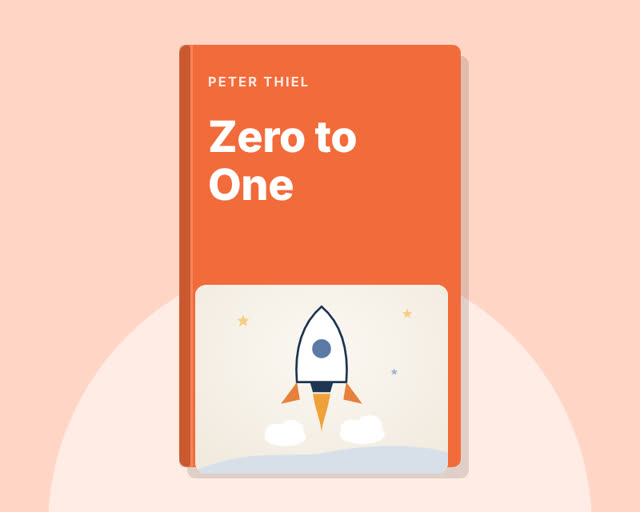
Zero to One by Peter Thiel with Blake Masters — illustrated cover

Zero to One

by Peter Thiel with Blake Masters

Zero to One grew out of a class on startups that Peter Thiel taught at Stanford, with notes shaped by his student Blake Masters. Its central claim is that real progress comes from creating new things, going from zero to one, rather than copying what already exists. Thiel challenges common business wisdom. He argues that competition destroys profits, and that great companies aim to become monopolies by owning a small market and then expanding. He urges founders to hunt for important truths that others overlook. He also asks them to treat the future as something you can plan and shape, not leave to chance. Drawing on his experience co-founding PayPal and investing early in Facebook, he explains why a few winners dominate outcomes, and why every business should be able to answer seven hard questions.

7 narrated, animated lessons · about 16 minutes in total.

Play lesson 1
Zero to One summary, chapter by chapter

  1. Lesson 1 · 2:15

    From Zero to One

    Real progress comes from creating something new, which is vertical progress, rather than copying what already works, which is horizontal progress.

  2. Lesson 2 · 2:04

    The Contrarian Question

    Great businesses start by asking what important truth very few people agree with you on, because every new company is built on a hidden secret.

  3. Lesson 3 · 2:23

    Plan a Definite Future

    Thiel argues the future is not a lottery, so you should replace vague optimism with concrete, long-term plans you actively work to make real.

  4. Lesson 4 · 2:22

    Competition Is for Losers

    Fierce competition drives profits toward zero, while companies with monopoly power, like Google, can capture lasting value and invest in the future.

  5. Lesson 5 · 2:09

    How to Build a Monopoly

    Lasting monopolies come from technology that is far better than alternatives, network effects, economies of scale, and branding, starting by dominating a tiny market, as PayPal did with eBay sellers.

  6. Lesson 6 · 2:11

    The Power Law Rules Everything

    A small number of companies and decisions produce most of the results, so you should focus intensely on the few things that could matter enormously.

  7. Lesson 7 · 2:27

    Seven Questions Every Startup Must Answer

    Thiel ties the book together with seven tests covering engineering, timing, monopoly, people, distribution, durability, and secrets, and he uses failed clean energy companies to show what happens when businesses fail them.

More books