Books / The 4 Disciplines of Execution

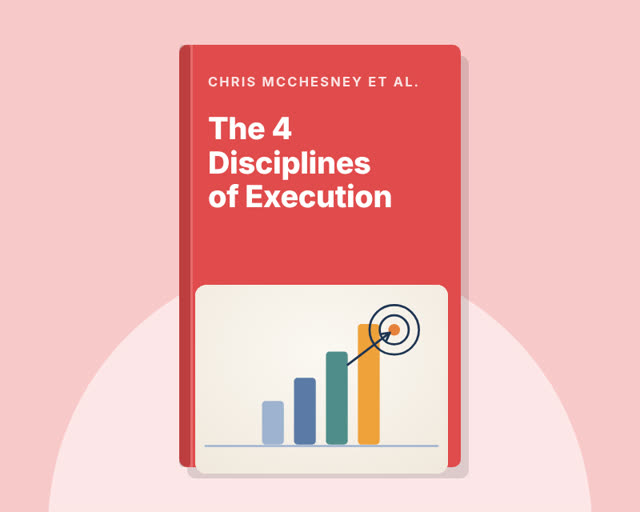
The 4 Disciplines of Execution by Chris McChesney, Sean Covey, and Jim Huling — illustrated cover

The 4 Disciplines of Execution

by Chris McChesney, Sean Covey, and Jim Huling

Most leaders can set a strategy. Far fewer can get it done. This book argues that the real enemy of execution is not laziness or bad ideas but the whirlwind, the endless urgent work that keeps the day running and swallows everything new. To break through, the authors offer four disciplines. First, focus on one or two wildly important goals instead of many. Second, act on lead measures, the small actions you control that drive results, rather than obsessing over lagging outcomes. Third, keep a simple, compelling scoreboard so the team always knows whether it is winning. Fourth, create a cadence of accountability through short weekly meetings where everyone commits to specific actions. Together, these disciplines turn vague strategy into steady, visible progress, even while the whirlwind keeps blowing.

8 narrated, animated lessons · about 17 minutes in total.

Play lesson 1

The 4 Disciplines of Execution summary, chapter by chapter

  1. Lesson 1 · 2:07

    Why Great Strategies Quietly Die

    The biggest threat to any important goal is the whirlwind, the urgent daily work that consumes the time and energy needed for anything new.

  2. Lesson 2 · 2:01

    The Four Disciplines at a Glance

    Execution becomes reliable when teams practise four connected disciplines: focus, lead measures, a scoreboard, and regular accountability.

  3. Lesson 3 · 2:16

    Focus on the Wildly Important

    Discipline 1 says the more goals you chase at once, the fewer you achieve, so pick one or two that truly matter most.

  4. Lesson 4 · 2:06

    From X to Y by When

    A wildly important goal must be measurable and time-bound, written as moving from a starting line to a finish line by a deadline.

  5. Lesson 5 · 1:54

    Lead Measures Beat Lag Measures

    Discipline 2 says to track the predictive actions you can influence, like daily calories and exercise, rather than only the end result, like weight lost.

  6. Lesson 6 · 2:04

    Keep a Players' Scoreboard

    Discipline 3 says a simple, visible scoreboard showing whether the team is winning drives far more engagement than a complex report.

  7. Lesson 7 · 2:02

    The Weekly Rhythm of Accountability

    Discipline 4 says short, regular team sessions, where people report on last week's commitments and make new ones, keep the goal alive.

  8. Lesson 8 · 2:07

    Winning Inside the Whirlwind

    The four disciplines work together to protect a small slice of time for your top goal, so progress happens even while the whirlwind keeps blowing.

More books