Books / The Power of Habit

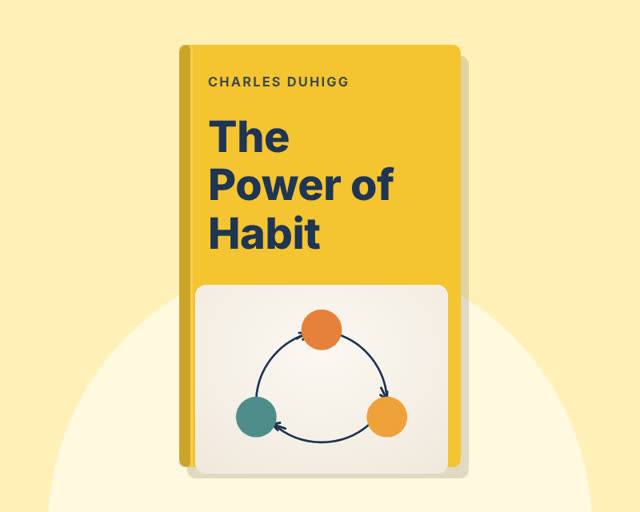
The Power of Habit by Charles Duhigg — illustrated cover

The Power of Habit

by Charles Duhigg

Charles Duhigg, an investigative journalist, explains why habits form and how they can be changed. Drawing on neuroscience and real stories, he shows that much of what we do each day runs on automatic. Every habit follows a three-part loop: a cue, a routine, and a reward. A craving for the reward is what powers the loop. Duhigg argues that habits are hard to erase. Instead, we can keep the old cue and reward and swap in a new routine. Belief, often built inside a group, helps the change stick. He then moves from individuals to companies and communities. He shows how small keystone habits can trigger wide change, and how willpower itself can be trained into a habit. His message is hopeful. Once you understand how a habit works, you gain the power to reshape it.

7 narrated, animated lessons · about 15 minutes in total.

Play lesson 1
The Power of Habit summary, chapter by chapter

  1. Lesson 1 · 2:07

    Your Life Runs on Autopilot

    Much of what we do each day is habit rather than conscious choice, as shown by a man with severe memory loss who still formed new routines without remembering them.

  2. Lesson 2 · 2:13

    The Habit Loop: Cue, Routine, Reward

    Every habit is a three-step loop in which a cue triggers a routine that delivers a reward, and the brain turns this loop into an automatic chunk to save effort.

  3. Lesson 3 · 1:55

    Craving Is the Engine

    Habits become powerful when we start to crave the reward in advance, which is how Febreze only took off once people anticipated a fresh-smelling finish to cleaning.

  4. Lesson 4 · 1:58

    The Golden Rule of Habit Change

    You can't simply delete a bad habit, but you can keep the same cue and reward and replace the routine, and believing change is possible, often with a group's support, helps it stick.

  5. Lesson 5 · 2:15

    Keystone Habits Spark Chain Reactions

    Some habits matter more than others because changing them sets off wider change, as when Paul O'Neill transformed Alcoa by making worker safety the one priority.

  6. Lesson 6 · 2:14

    Willpower Can Become a Habit

    Willpower works like a muscle that can be strengthened, and Starbucks turned self-control into habit by having employees plan and rehearse their responses to stressful moments ahead of time.

  7. Lesson 7 · 2:08

    Rewire Your Own Habits

    Because habits can be understood, they can be changed, and you can do it yourself by identifying the routine, experimenting with rewards, isolating the cue, and making a plan.

More books