Books / Influence: The Psychology of Persuasion

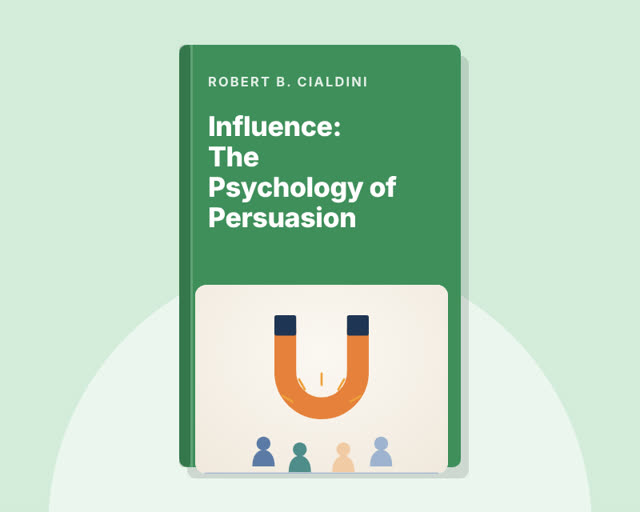
Influence: The Psychology of Persuasion by Robert B. Cialdini — illustrated cover

Influence: The Psychology of Persuasion

by Robert B. Cialdini

Why do we agree to things we never meant to agree to? Social psychologist Robert Cialdini went undercover in sales teams, fundraising groups and advertising firms to find out. He found that most persuasion runs on a small set of automatic mental shortcuts. These shortcuts usually serve us well, because they let us decide quickly in a complicated world. But compliance professionals have learned to trigger them on purpose. Cialdini names six: reciprocation, commitment and consistency, social proof, liking, authority, and scarcity. For each one, he explains why it works, shows how it gets exploited, and offers a practical defense. The book is not anti-persuasion. Its message is that once you can spot these triggers, you can welcome honest influence and say no to manipulation.

7 narrated, animated lessons · about 15 minutes in total.

Play lesson 1
Influence: The Psychology of Persuasion summary, chapter by chapter

  1. Lesson 1 · 2:11

    Click, Whirr: Our Automatic Yes

    Like animals responding to a single trigger feature, people often comply automatically when a familiar cue appears, and persuaders can exploit these mental shortcuts.

  2. Lesson 2 · 2:14

    Reciprocation: The Pull of a Gift

    We feel strongly obliged to repay what others give us, even uninvited gifts and concessions, so a small favor or a retreat to a smaller request can win an outsized yes.

  3. Lesson 3 · 2:12

    Commitment and Consistency

    Once we take a stand, especially an active, public, written one, we feel pressure to act consistently with it, which lets small first commitments lead to much bigger ones.

  4. Lesson 4 · 2:06

    Social Proof: Following the Crowd

    When we are uncertain, we decide what is right by watching what people like us are doing, which can be used to steer us and can even freeze bystanders in an emergency.

  5. Lesson 5 · 2:14

    Liking: Yes to People We Like

    We are far more likely to agree with people we like, and persuaders build that liking through attractiveness, similarity, compliments, contact, cooperation and association.

  6. Lesson 6 · 2:06

    Authority: Obeying Titles and Uniforms

    We have a deep habit of deferring to authority, so mere symbols such as titles, clothing and status can push us to comply even against our own judgment.

  7. Lesson 7 · 2:07

    Scarcity and Defending Your Autopilot

    Things seem more valuable when they are rare or slipping away, and like every trigger in the book, scarcity loses its grip once you learn to notice the pressure and ask whether the shortcut is being honestly used.

More books